
Les investissements alternatifs sont depuis longtemps le fief des personnes très fortunées. En effet, les particuliers fortunés y consacrent déjà jusqu’à 50% de leurs actifs. Mais, dernièrement, ces investissements s’ouvrent à un plus large éventail d’investisseurs, y compris ceux qui n’étaient, jusqu’à maintenant, pas impliqués dans ces marchés.
Tandis que le paysage de l’investissement évolue, comprendre les nuances et les avantages des investissements alternatifs permet de considérablement diversifier votre portefeuille et le protéger contre la volatilité.
Voici ce qu’il vous faut savoir pour naviguer dans ce domaine complexe en toute sérénité.
Qu’est-ce qu’un investissement alternatif?
Les investissements alternatifs (également connus sous le nom d’actifs alternatifs) sont une large pléthore d’actifs en dehors des actions, des obligations et des liquidités traditionnelles. Ce terme englobe les actifs tangibles tels que les pierres et métaux précieux, les objets de collection (art, vins et whiskys rares, voitures de collection, antiquités, etc.), les produits de luxe (par exemple, une montre Patek Philippe ou un sac Birkin) et certains actifs financiers tels que le capital-investissement, les matières premières et les prêts P2P.
Contrairement aux investissements traditionnels, les investissements alternatifs requièrent souvent des connaissances plus spécialisées pour une gestion efficace, mais ils offrent des profils de risque et de rendement diversifiés qui peuvent améliorer la performance d’un portefeuille, en particulier en période de turbulences.
Types d’investissements alternatifs populaires
- Art et objets de collection: Cette catégorie comprend les peintures, les sculptures, les vins rares et les voitures de collection. Non seulement ces actifs procurent un plaisir esthétique, mais ils font également preuve d’une appréciation substantielle au fil du temps.
- Pierres et métaux précieux: Les investissements dans l’or, l’argent, le platine et les diamants offrent une protection contre l’inflation et la dévaluation des monnaies.
- Produits de luxe: Les articles de grande valeur comme les montres Rolex ou les sacs à main Hermès peuvent accumuler de la valeur et sont souvent considérés comme des « investissements passion ».
- Immobilier: Comprend les propriétés résidentielles et commerciales, ainsi que les fonds d’investissement immobilier (REIT).
- Fonds de capital-investissement et fonds spéculatifs: Ces fonds investissent dans des entreprises (généralement privées) et tentent de les restructurer ou de les développer pour obtenir des rendements plus élevés.
- Matières premières: Les biens physiques tels que le pétrole, le gaz naturel et les produits agricoles sont des investissements courants dans les matières premières.
Les investissements alternatifs sont connus des particuliers très fortunés depuis des décennies et représentent une part importante de leur portefeuille.
Selon une étude récente de Motley Fool, l’un des plus grands portails financiers au monde, les investisseurs très fortunés détiennent jusqu’à 50% de leurs actifs dans des investissements alternatifs, alors que les investisseurs particuliers n’y consacrent qu’environ 5% de leurs portefeuilles.
Cependant, de plus en plus d’investisseurs particuliers cherchent désormais à diversifier leur portefeuille avec ces fameux actifs alternatifs. L’une des catégories les plus populaires est l’art – en 2022, le volume mondial des transactions d’art s’élevait à 67,8 milliards de dollars. Au cours de la dernière décennie, les actifs de cette catégorie ont augmenté de 109%, selon l’indice d’investissement de luxe de Knight Frank. Et nous ne parlons pas seulement de peintures de génies comme Picasso, mais aussi d’artistes contemporains en pleine ascension.
Qu’est-ce qui a empêché les gens ordinaires d’investir dans ces actifs?
Plusieurs raisons expliquent pourquoi les investisseurs particuliers n’étaient pas en mesure de diversifier leur portefeuille avec des actifs alternatifs jusqu’à maintenant:
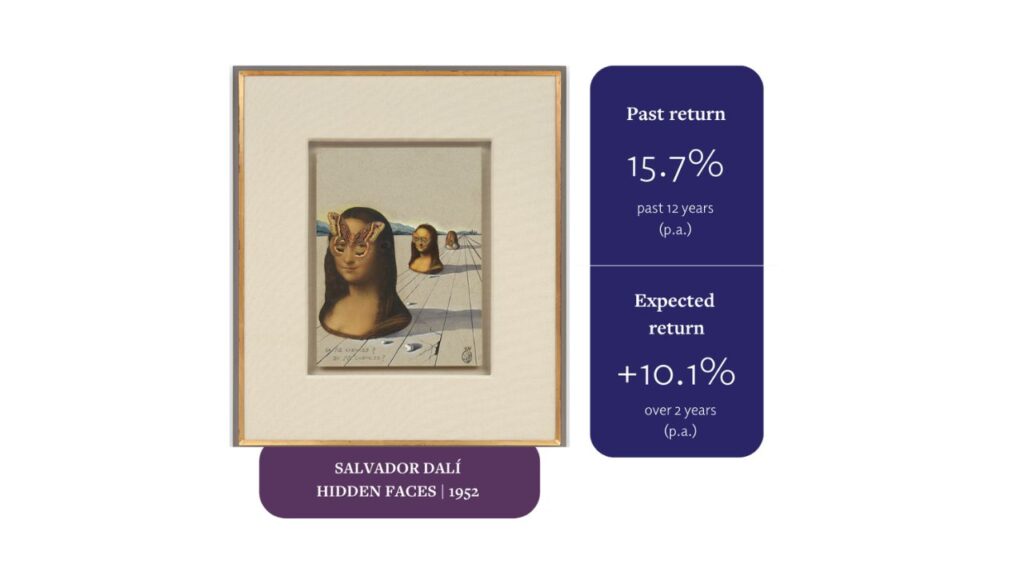
- Barrières à l’entrée élevées: la grande majorité des investisseurs n’ont pas les moyens d’acheter, par exemple, un « Visages cachés » de Salvador Dali d’une valeur de 433 000 livres sterling ou une Patek Philippe Grand Complications d’une valeur de 61 500 livres sterling.
- Expertise et traitement spécifiques requis: comment vérifier l’authenticité et les conditions de qualité des différents actifs? Comment gérer le stockage et l’entretien d’un tonneau de whisky Macallan ou d’une Ferrari 348TB? Historiquement, ces questions ont toujours été traitées par des banques privées ou des consultants spécialisés.
- Accès limité pour les acheteurs: même si une personne décidait d’investir dans une montre Rolex, ce n’était jamais aussi simple, car il fallait généralement s’inscrire sur une liste d’attente pour être informé des options disponibles.
L’essor des investissements fractionnés
Les investissements fractionnés, qui sont désormais entièrement réglementés en Suisse et dans l’Union européenne, permettent de surmonter le premier obstacle majeur pour les petits investisseurs.
L’investissement fractionné est le processus par lequel un investisseur achète un pourcentage ou une part d’un actif au lieu d’en payer le prix total. Cela permet à ceux qui ont moins de capital ou qui cherchent à diversifier leurs actifs de mettre un pied dans des domaines tels que l’immobilier, l’aviation et les beaux-arts. Par exemple, il est possible d’investir 50 ou 500 euros dans une œuvre d’art et de bénéficier, de façon proportionnelle, de la performance de l’actif, en étant légalement enregistré en tant que propriétaire fractionnaire du dit actif particulier.
Les deuxième et troisième obstacles sont désormais résolus par les organisations financières, qui se chargent de l’expertise et des questions opérationnelles pour les investisseurs fractionnaires.
Pourquoi les investissements alternatifs gagnent-ils en popularité?
L’intérêt croissant pour les investissements alternatifs peut être attribué à plusieurs facteurs:
- Couverture contre l’inflation. Les diamants de haute qualité ou les lingots de platine ont une volatilité mensuelle inférieure à 3% et une corrélation inférieure à 0,26 avec les actions mondiales. (source : Bloomberg).
- Augmentez votre patrimoine. Selon l’index d’investissement de luxe de Knight Frank, des catégories comme l’art, le whisky rare et les montres de luxe ont fait preuve d’un rendement de plus de 10% par an au cours de la dernière décennie, dépassant souvent le DAX 40 ou le S&P 500.
- Combinez le pragmatisme de l’investissement avec vos convictions et vos passions. Que vous recherchiez des options d’investissement durable ou que vous souhaitiez combiner votre hobby (timbres, voitures de collection, Lego) à des gains financiers, ce n’est pas pour rien que les actifs alternatifs sont parfois appelés « investissements passion ».
Comparaison entre les rendements d’investissements alternatifs et traditionnels
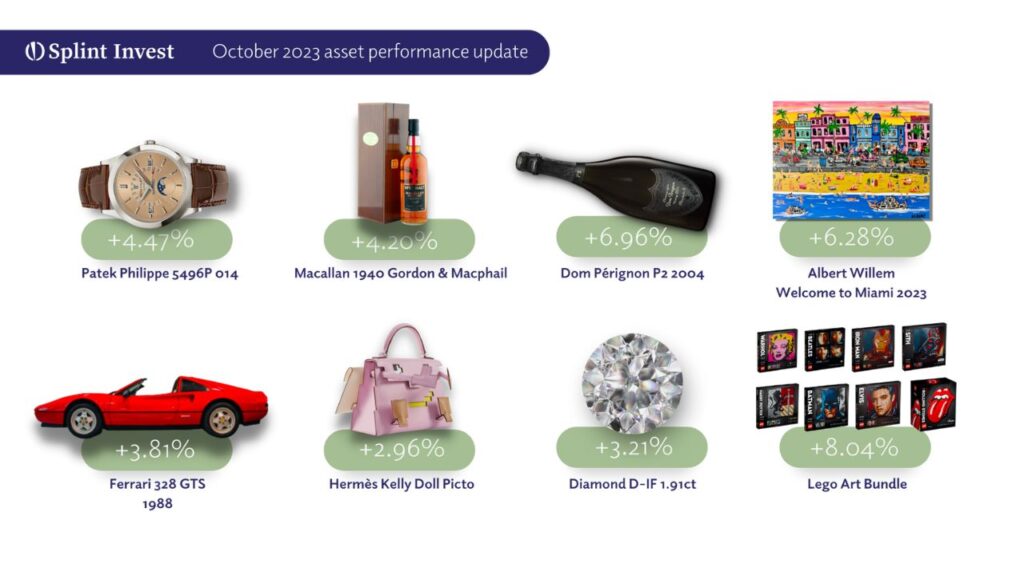
Si les investissements alternatifs peuvent offrir des rendements plus élevés, ils s’accompagnent également de risques et de défis qui leur sont propres. Les rendements de ce type d’investissement sont très variables. L’art et les objets de collection peuvent offrir des rendements élevés, mais ils nécessitent davantage de connaissances et une gestion active pour conserver leur valeur et garantir leur authenticité.
Les actifs alternatifs sont très diversifiés et, en fonction de vos objectifs d’investissement, ils peuvent vous offrir des opportunités à très faible volatilité et des rendements attendus de 2 à 3% par an, tandis que d’autres options (certainement plus risquées), comme les œuvres d’art de jeunes créateurs en plein essor, peuvent vous rapporter plus de 20% de rendement par an.
Quel est le meilleur conseil à donner à quelqu’un qui envisage d’investir de cette manière?
Lorsque vous vous lancez dans l’investissement alternatif, investissez dans différentes catégories afin de bien diversifier votre portefeuille. Si vous n’êtes pas prêt à consacrer beaucoup de temps à l’apprentissage des différentes catégories et à la sélection des actifs, trouvez un partenaire/intermédiaire fiable pour vous aider.
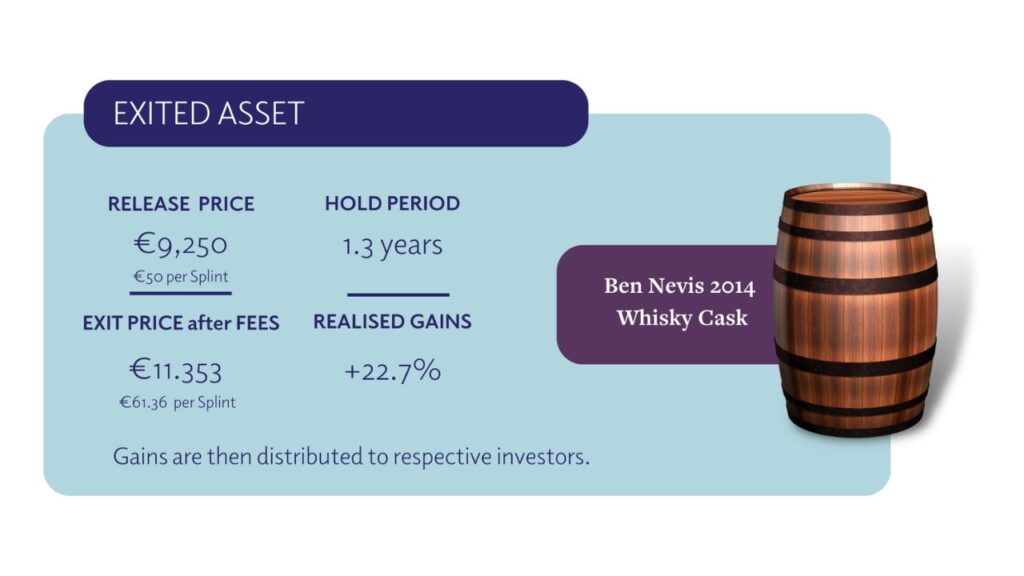
Splint Invest, le plus grand acteur de cette niche en Suisse, comprend ces défis et aide les investisseurs privés à diversifier leur portefeuille en leur fournissant un accès facile aux investissements alternatifs. Splint Invest est une institution financière enregistrée en Suisse, régulée par VQF (Nr. 100956). Leur application permet aux investisseurs de commencer leur parcours d’investissement alternatif avec seulement 50 EUR. Fidèles à notre engagement de vous aider à faire fructifier votre patrimoine, nous sommes heureux d’offrir aux utilisateurs d’Alpian un bonus de bienvenue de 60 EUR avec le code « Alpian60« * afin qu’ils puissent tester l’ensemble du processus sans investir leur propre argent. Pour télécharger l’application, cliquez sur ce lien, trouvez l’application Splint Invest sur l’App Store ou Google Play ou rendez-vous sur www.splintinvest.com. Nous vous souhaitons de fructueux investissements alternatifs!
*Offre valable exclusivement pour les nouveaux utilisateurs.
The power and penalties of diversification
Pour en savoir plus sur la manière de diversifier votre portefeuille, cliquez sur le bouton ci-dessous pour lire notre article sur ce sujet.


