

Seit einiger Zeit erlebt die digitale Wirtschaft einen bemerkenswerten Innovationszyklus, insbesondere in Bezug auf die Entstehung neuer Formen digitaler Werte, einschließlich des Geldes selbst , wie zum Beispiel Kryptowährungen, nicht-fungiblen Token (NFTs), digitalen Zentralbankwährungen (CBDCs) und sogar Blockchain-basierten digitalen Vermögenswerten wie Stablecoins. Zweifellos durchläuft die Finanzwelt einen Wandel von nie dagewesenem Ausmaß, der nur mit wenigen Momenten in der Geschichte vergleichbar ist.
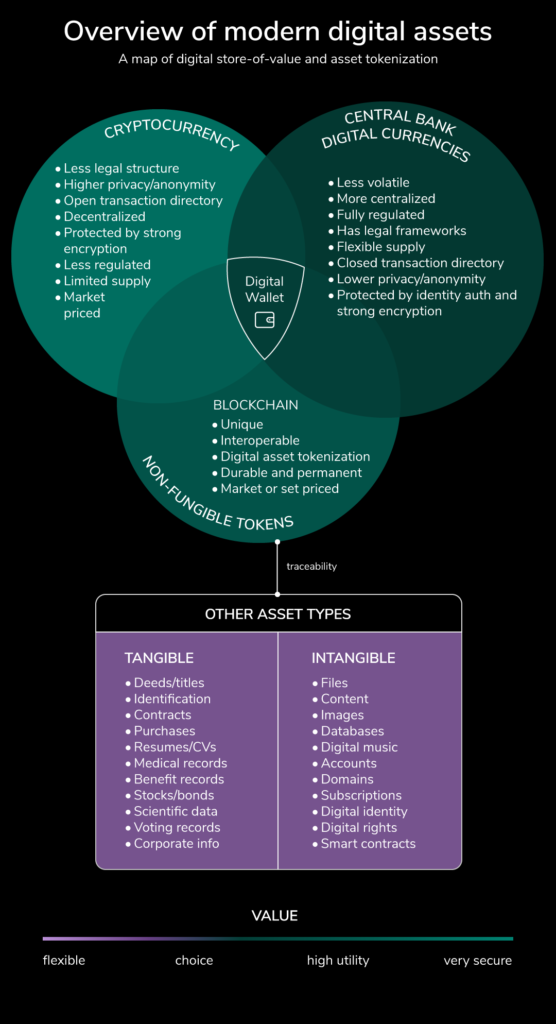
Aber was genau ist ein digitaler Vermögenswert?
Die Marktstruktur und das Ökosystem der digitalen Vermögenswerte, die sich zunächst auf Privatkunden, die sich zunächst auf Privatkunden, vermögende Anleger und Krypto-native Investoren konzentrierten, expandieren.
Diese Expansion wird durch die Tatsache belegt, dass traditionelle institutionelle Anleger digitale Vermögenswerte in ihre herkömmlichen Portfolios integrieren.
Die Währungsbehörden haben bei dieser Entwicklung eine entscheidende Rolle gespielt, indem sie entweder digitale Währungen als gesetzliches Zahlungsmittel eingeführt haben, wie im Fall von El Salvador, oder indem sie digitale Versionen ihrer jeweiligen nationalen Währungen eingeführt haben, wie der digitale Yuan von China.

Um eine Vorstellung davon zu bekommen, wie dies funktioniert, können Sie sich einen digitalen Vermögenswert als ein Wertobjekt in einer virtuellen Box vorstellen. Diese Box kann alles enthalten, was digital gespeichert ist: ein digitales Kunstwerk, ein Video, ein Vertragsdokument oder sogar digitales Geld. Diese elektronischen Dateien, die man besitzen und transferieren kann, funktionieren ähnlich wie physische Objekte in der realen Welt.
Aber wie kann man den Überblick darüber behalten, wem diese digitalen Kisten gehören und was sie enthalten? An dieser Stelle kommt ein System ins Spiel, das einem öffentlichen Bibliothekskatalog ähnelt: die Blockchain. Dieser Datensatz wird nicht an einem Ort gespeichert, sondern ist dezentral über viele Computer auf der ganzen Welt verteilt.
Was ist eine Kryptowährung?
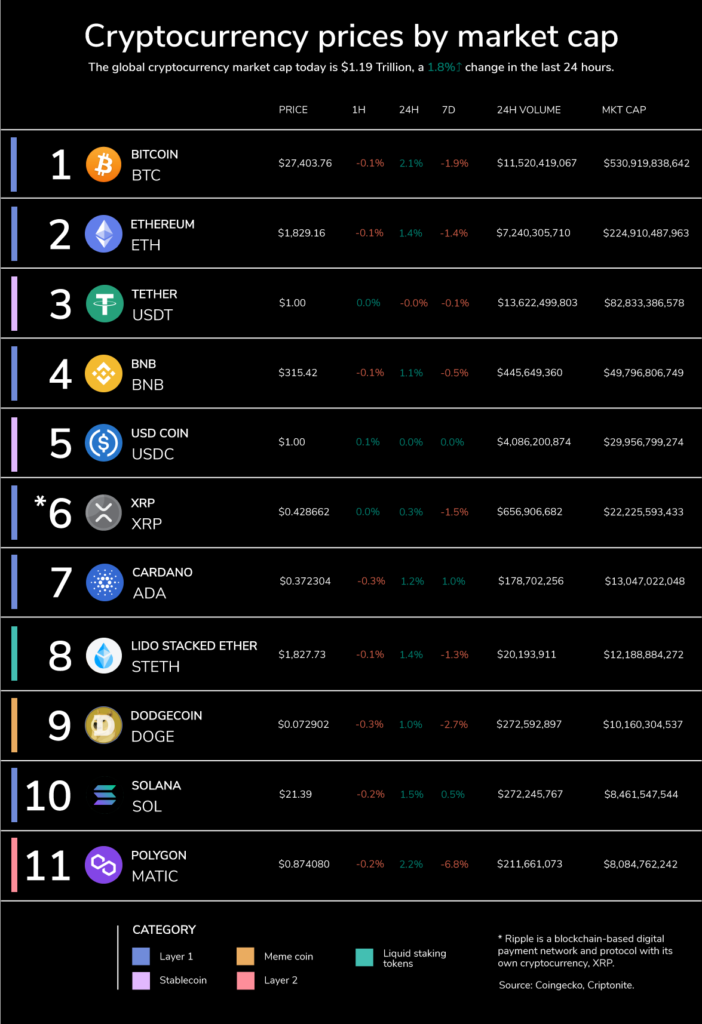
Eine Kryptowährung ist eine digitale oder virtuelle Währung, die Kryptographie nutzt, um Transaktionen zu sichern.
Die beiden bekanntesten Blockchain-Kryptowährungen sind Bitcoin und Ethereum. Bitcoin hält fast 40 % des Gesamtwerts auf dem Kryptowährungsmarkt, wodurch seine Blockchain weithin anerkannt ist. Die Blockchain von Ethereum hingegen zeichnet sich durch eine große Anzahl von Transaktionen aus.
Was ist ein nicht fungibler Token (NFT)?
Ein NFT ist ein digitaler Vermögenswert, der die Form von Kunst, Musik, Spielobjekten, Videos und mehr annehmen kann. Er ist in der Regel einzigartig oder zumindest in sehr begrenzter Auflage erhältlich und verfügt über einzigartige Identifikationscodes. Jede NFT hat eine digitale Signatur, die es unmöglich macht, dass NFTs ausgetauscht werden oder einander gleichen.
Wenn jemand eine eigene Sammlung von NFTs anlegen möchte, benötigt er zwei Schlüsselelemente: eine digitale Brieftasche, in der er NFTs speichern kann, und eine Kryptowährung (höchstwahrscheinlich ETH, da die meisten NFTs Teil der Ethereum-Blockchain sind). Eine Kryptowährung kann mit einer Kreditkarte oder über eine Kryptowährungsbörse erworben werden.
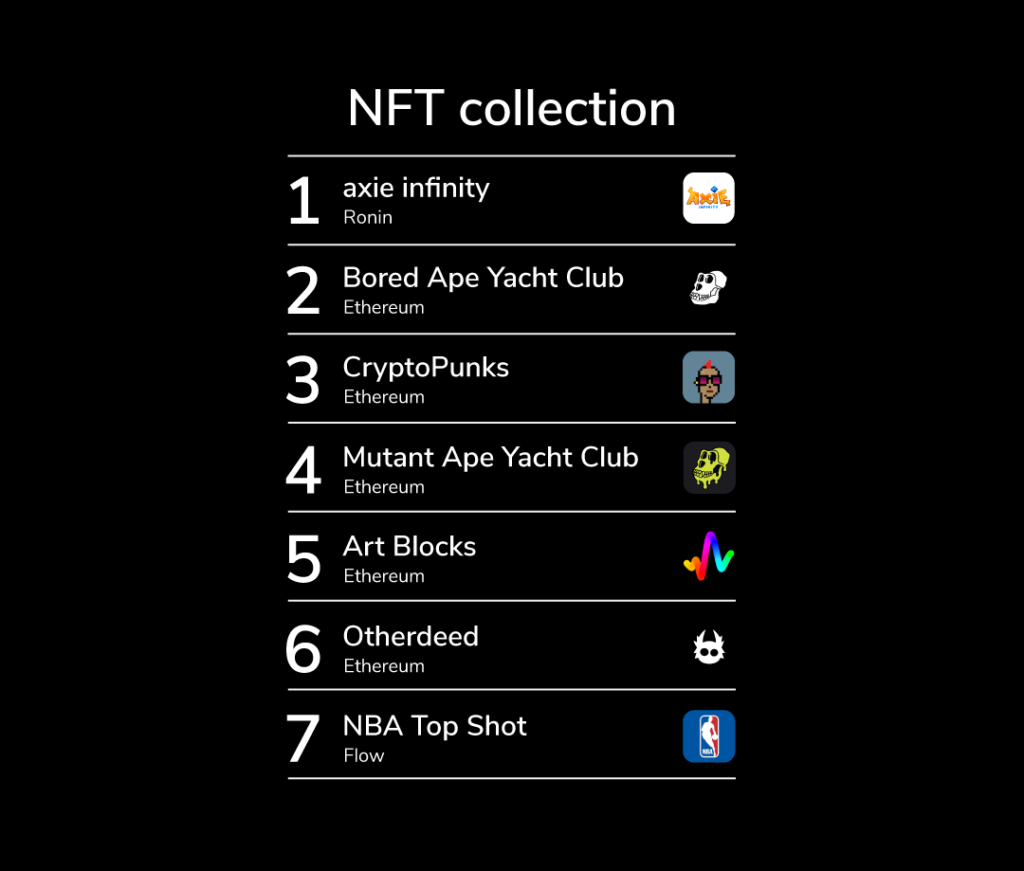
Im Folgenden finden Sie eine Rangliste der NFTs, geordnet nach ihrem Umsatzvolumen seit ihrer Einführung:
Axie Infinity, ein NFT-basiertes Online-Spiel, bleibt auf Platz 1. Auf Platz 2 liegt die digitale Kunstsammlung „Bored Ape yacht Club“, die eine der stärksten Communities im NFT-Bereich hat. Platz 3 geht an CryptoPunks, die als eine der ersten und bemerkenswertesten generativen PFP-Sammlungen (Picture for Proof) gilt und Mitte 2017 von Larva Labs als ein festes Set von 10.000 Objekten auf den Markt gebracht wurde. Diese sind in renommierten Publikationen wie der NYT, Christie’s London und Art Basel Miami erschienen.
Was ist eine digitale Zentralbankwährung oder CBDC?
Eine digitale Zentralbankwährung oder CBDC ist eine virtuelle Währung, die von einer Zentralbank unterstützt und ausgegeben wird.
CBDCs haben das Potenzial, die Effizienz und Sicherheit von Zahlungen zwischen Banken, Institutionen und Privatpersonen zu verbessern. Im Gegensatz zu Kryptowährungen, die öffentliche Blockchains ohne Berechtigungen verwenden, basieren CBDCs jedoch auf permissioned (privaten) Blockchains mit Berechtigungen.
Eine private Blockchain ist ein verteiltes Hauptbuch, das als geschlossene und sichere Datenbank auf der Grundlage kryptographischer Konzepte funktioniert und nicht dezentralisiert ist. Die Beschränkungen für CBDC-Netzwerke werden daher von einer Zentralbank festgelegt.
Wenn Sie mehr über digitale Vermögenswerte erfahren möchten, besuchen Sie die Kryptonite Academy „The Basics of Digital Assets„.
Digitale Vermögenswerte treiben den Wandel in der digitalen Wirtschaft und damit auch im gesamten E-Commerce-Umfeld voran. Lesen Sie unten, wie die Blockchain-Technologie den E-Commerce beeinflusst.


